



This hotel consumer insights report presents an independent analysis of public customer reviews, complaint signals, praise patterns, and brand perception across selected Hotel chains operating in Central Europe. It focuses on five well known brands, ibis, B&B Hotels, Motel One, Leonardo Hotels, and Mercure. Rather than treating reviews as isolated opinions, the study considers them as a source of market intelligence, reflecting how customers describe their experiences, where expectations are met, and where perception gaps may emerge across comparable hotel propositions.
The geographic scope covers selected cities across Germany, Austria and Switzerland, specifically Berlin, Munich, Hamburg, Stuttgart, Vienna, and Zurich. This selection provides a practical view of hotel customer sentiment across major urban markets in Central Europe, combining business destinations, leisure demand, and large city operating environments. The scope is designed to support a focused comparison across locations with meaningful customer volume and brand presence. Further studies may examine additional regions or markets separately, particularly where local customer expectations, competitive intensity, or travel patterns differ materially.
What this consumer insights report examines
The objective is not to recommend the best company, branch, brand, or provider. Instead, this report aims to identify recurring operational weaknesses, customer pain points, service gaps, and brand perception patterns visible across the market.
Public reviews can provide useful direction when they are assessed systematically, especially where similar themes appear across multiple properties, cities, or customer profiles. In this context, the analysis is intended to support a more balanced understanding of market performance rather than a simple consumer ranking.
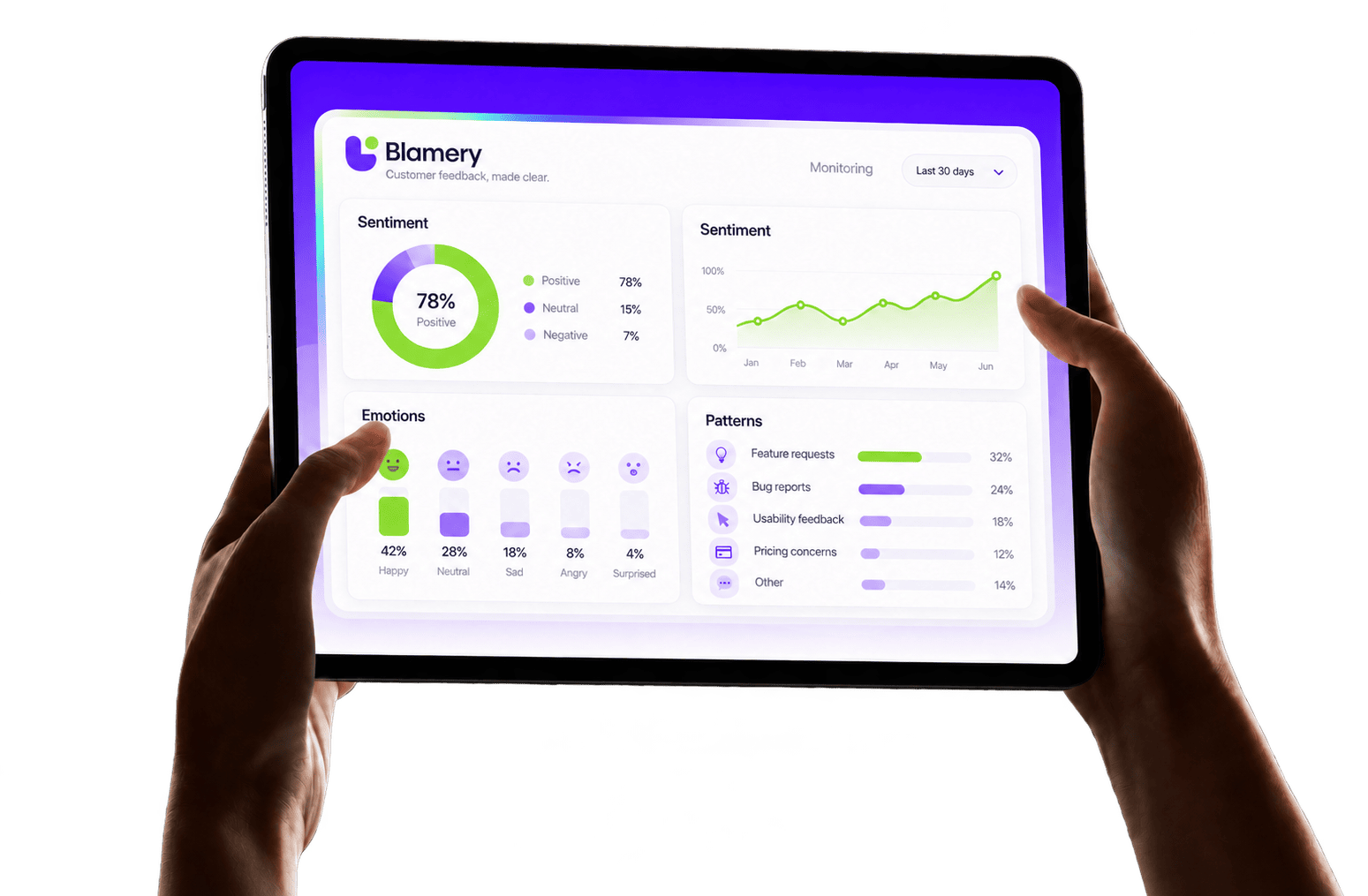
This report is part of Blamery’s Consumer Insights series and demonstrates the type of structured insight that can be extracted from public review data using blamery.com. The platform helps convert unstructured customer feedback into a clearer view of recurring themes, sentiment patterns, and areas of potential management attention. Used in this way, review data becomes more than a reputational signal. It becomes an input for operational analysis, competitor monitoring, and customer experience improvement across the Hotel category.
The methodology is based on identifying repeated themes rather than focusing on isolated complaints or one off negative experiences. Individual reviews can be useful, but they are rarely sufficient to support broader conclusions on their own.
The analysis therefore places greater emphasis on patterns that recur across locations, brands, and customer segments.
Repeated patterns are more meaningful than individual anecdotes, because they are more likely to indicate structural issues, consistent strengths, or expectations that are not being met consistently across the customer journey.
Report structure
This study comprises two parts.
1. Central Europe hotel market overview
The first part provides an overall benchmark of all selected brands and locations at market level, including overall sentiment, complaint concentration, positive review patterns, and location based differences.
2. Consumer insights by hotel brand
The second part provides a brand by brand analysis of ibis, B&B Hotels, Motel One, Leonardo Hotels, and Mercure. This includes recurring complaint themes, praise patterns, emotional signals, stronger and weaker locations, and an assessment of whether observed issues appear to be brand wide or more specific to individual locations.
In the Hotel sector, customers often expect the essentials to work reliably before they notice anything exceptional. That makes public review data especially valuable. It shows not only where brands create positive impressions, but also where everyday expectations become the clearest test of performance.
How Customer Sentiment Differs Between Hotel Brands
The chart shows the aggregated distribution of positive, neutral, and negative public reviews for each Hotel brand across the analyzed locations in Central Europe. The results are not tied to one specific city, branch, or property. Instead, they combine review sentiment across the selected market to show how each brand performs overall in customer perception.
Novotel records the highest positive review share in the dataset, with 77.1% positive sentiment, 10.1% neutral sentiment, and 12.8% negative sentiment. This makes it the strongest performer in the chart from an overall sentiment balance perspective.
*The result does not indicate that the brand is free from complaints, but it suggests that positive feedback is more dominant relative to negative feedback than for the other analyzed brands.
Motel One forms the clearest second strongest position by positive sentiment, with 76.1% positive reviews and 12.7% negative reviews. B&B Hotels is close behind, with 75.4% positive sentiment and the lowest negative share in the group at 11.8%. In both cases, positive feedback remains by far the largest segment, indicating a broadly favorable public perception across the aggregated market rather than a sentiment profile driven primarily by complaints.
The highest negative review share is recorded by Leonardo Hotels, where negative sentiment accounts for 19.4% of reviewed feedback, alongside 68.4% positive sentiment. ibis also shows a comparatively elevated negative share at 17.0%, while Mercure follows at 16.1%.
This does not prove poor performance in every location, but it does suggest that complaints form a larger part of public perception for these brands across the analyzed market.
Overall, sentiment is not sharply divided across brands, as all brands record positive feedback as the largest segment. However, the distribution is not fully even. The stronger performers show a healthier balance between positive and negative sentiment, while brands with higher negative shares may face greater exposure to variation in service quality, pricing clarity, property execution, or operational consistency. Even the stronger performers retain visible negative segments, which indicates that sustained performance depends on consistent branch execution across the market.
Negative Sentiment Heatmap: Brands vs. Locations
This heatmap compares the negative review share for each Hotel brand across the analyzed locations in Central Europe, covering Berlin, Munich, Hamburg, Stuttgart, Vienna, and Zurich. Unlike the broader sentiment chart, this view focuses only on negative reviews as a percentage of total analyzed reviews, allowing a more direct comparison of where complaint concentration is relatively higher or lower across brands and cities.
The table should be read as a relative benchmark. Lower values are better, because they indicate that negative feedback represents a smaller share of the public review profile. Higher values indicate that negative reviews make up a larger part of the brand profile in that location.
In the heatmap, purple cells indicate lower negative share and therefore stronger relative performance, while lime green cells indicate higher negative share and therefore weaker relative performance. In practical terms, higher values indicate stronger complaint concentration, not necessarily a complete view of service quality.
The purpose of this analysis is not to declare any brand or location universally good or bad. Public reviews reflect a mix of guest expectations, local operating conditions, property standards, pricing perception, and service experience. The heatmap is intended to identify where negative feedback appears more concentrated, and where a brand or location may deserve closer operational review.
At brand level, B&B Hotels, Motel One, and Novotel show the strongest overall negative review profiles, based on lower average negative review shares across the six cities. B&B Hotels records the lowest average negative share at 11.8%, supported by particularly low values in Zurich at 6.5%, Munich at 7.0%, and Stuttgart at 8.0%. This indicates strong relative performance in several cities, although the brand is less consistent in Berlin at 17.0%, Vienna at 16.2%, and Hamburg at 16.1%.
Motel One appears to be the most stable performer across the analyzed locations. Its negative review share ranges from 10.3% in Hamburg to 15.5% in Zurich, with an average of 12.7%. This relatively narrow range suggests a more consistent public review profile across cities. Novotel also performs comparatively well overall, with an average of 12.8%, and particularly low negative review shares in Stuttgart at 8.1%, Zurich at 8.5%, and Hamburg at 9.8%. However, its results in Munich at 18.0% and Berlin at 17.5% point to more location specific variation.
The middle of the benchmark includes Mercure and ibis, but both show important differences by location. Mercure has a comparatively low negative share in Munich at 6.0% and Vienna at 11.0%, yet rises sharply in Zurich to 31.5%. ibis records a lower result in Munich at 11.3%, but reaches 21.5% in both Hamburg and Zurich. These patterns suggest that the issue is unlikely to be uniform across all locations. Instead, performance appears more dependent on individual market or property execution.
The weakest overall brand profile in this benchmark is Leonardo Hotels, with an average negative review share of 19.4%. The brand shows very strong relative results in Stuttgart at 7.7% and Hamburg at 7.9%, but also records the highest negative review shares in the dataset, including 32.5% in Zurich, 28.0% in Vienna, and 22.5% in Munich. This indicates substantial inconsistency across locations. It suggests stronger complaint concentration in selected cities, rather than proving that every branch performs poorly.
Large within city gaps are particularly visible in Zurich, Vienna, and Munich. Zurich shows the widest spread, from B&B Hotels at 6.5% and Novotel at 8.5% to Leonardo Hotels at 32.5% and Mercure at 31.5%. Vienna also shows a notable gap, with Mercure at 11.0% compared with Leonardo Hotels at 28.0%. In Munich, Mercure records 6.0% and B&B Hotels 7.0%, while Leonardo Hotels reaches 22.5% and Novotel reaches 18.0%. These differences point to highly uneven guest review outcomes within the same local markets.
At location level, Zurich appears to have the most elevated negative review profile overall, with an average negative share of 19.3%, driven by very high values for Leonardo Hotels and Mercure, as well as elevated results for ibis and Motel One. Vienna and Berlin also show relatively higher average negative shares, at 16.7% and 16.5% respectively. By contrast, Stuttgart appears to be the strongest location overall, with an average negative share of 10.9%, and no brand exceeding 15.2%. Munich and Hamburg sit between these positions, with mixed brand outcomes rather than uniformly high or low negative review shares.
The central takeaway is that dissatisfaction is not evenly distributed across the market. Negative review concentration appears to cluster around specific brand and city combinations, especially in Zurich, Vienna, and selected Munich results. The data suggests that operational consistency, service delivery, property level execution, pricing clarity, and guest expectation management may differ meaningfully by location, even within the same hotel chain.
Brand-by-Brand Breakdown: Looking at Each Brand Separately
After the overall benchmark, the report now moves into a brand by brand analysis. This section looks at each brand separately to understand not only how often customers complain, but what they complain about, where complaints appear, and what kind of emotional response each brand seems to generate.
For each brand, we will examine:
- how negative review patterns differ across locations;
- which recurring complaint themes appear most often;
- where the brand performs comparatively better or worse;
- what emotional signals customers use when describing their experience;
- how positive and negative reviews compare in more detail;
- whether problems appear to be brand wide or mainly location specific;
- what these patterns suggest about operational consistency and customer perception.
ibis Customer Feedback Across Central Europe: Review Patterns and Sentiment
The report now moves from the overall benchmark to a more detailed brand by brand view. This section examines ibis across the analyzed cities in Germany, Austria, and Switzerland, with a focus on the balance between positive, neutral, and negative public feedback in each location.
Across the selected locations, positive reviews represent the largest share of feedback in every city. This indicates that ibis maintains a broadly favorable public review profile across the analyzed Central European markets, although the strength of that sentiment varies meaningfully by location.
Vienna records the highest positive review share at 76.0%, followed by Munich at 73.2%. These results suggest that public sentiment toward ibis is strongest in these two cities, with Vienna standing out as the clearest positive performer in the sample.
At the other end of the range, Hamburg has the lowest positive review share at 59.0%, while Zurich follows at 62.0%. Both locations remain majority positive, but their lower positive shares point to a less consistent customer perception compared with Vienna and Munich.
Negative feedback is lowest in Munich, at 11.3%, which reinforces its relatively strong sentiment position. The highest negative review shares are observed in both Hamburg and Zurich, each at 21.5%. This suggests a more concentrated complaint profile in these two locations, although the data does not indicate the underlying causes of dissatisfaction.
The average sentiment profile for ibis across the analyzed locations is 67.8% positive, 15.2% neutral, and 17.0% negative. This average confirms a generally positive brand position, but it also shows that negative feedback remains material enough to warrant closer review in the following sections.
Overall, the sentiment profile suggests that ibis performs with broad positive consistency, but not uniform strength, across Central Europe. Before moving into the next charts on emotions, negative feedback patterns, and positive review patterns, the brand should be understood as a generally well received hotel chain with stronger sentiment in Vienna and Munich, and more visible complaint concentration in Hamburg and Zurich.
What Drives Negative Feedback for ibis
The pattern cloud shows recurring negative review patterns identified in ibis customer feedback across the analyzed locations in selected cities across Germany, Austria and Switzerland. Text size, color emphasis, and visual weight reflect the number of mapped mentions, with more prominent cards indicating themes that appeared more often in the review data.
The largest negative feedback category is Inadequate Room Maintenance, with 40 mapped review documents. For the hotel category, this pattern suggests that guest dissatisfaction is most often linked to the condition and functionality of the room environment, which may include perceived issues around comfort, equipment, or maintenance response. It does not prove a systemic operational failure, but it does indicate that room upkeep is a material driver of negative sentiment for ibis in the reviewed sample.
The remaining patterns point to a broader mix of operational concerns, including Inconsistent Room Cleanliness And Maintenance Issues, Rude Reception Staff Behavior, Inconsistent Problem Resolution And Lack Of Staff Accountability, Missing Basic Amenities In Budget Hotels, Inconsistent Service Standards Across Locations, and Lack Of Transparency In Billing. Taken together, these themes appear spread across several execution areas, although many still connect back to the consistency of the stay experience, particularly room readiness, service interaction, and clarity of customer handling.
The central takeaway for ibis is that negative feedback is most closely associated with service consistency and room execution.
Strengthening reliability across room maintenance, staff response, and customer communication would be the most relevant operational focus based on the observed review patterns.
Emotional Signals in ibis Reviews by Location
After reviewing sentiment and negative feedback patterns, the analysis now turns to the emotional signals behind customer feedback. Sentiment shows whether reviews are positive, neutral, or negative, while emotion indicates how customers describe the experience, including satisfaction, frustration, disappointment, anger, trust, delight, or indifference.
The leading emotional signal for ibis across the analyzed cities is satisfaction. It is highest in Munich at 69.6%, followed by Vienna at 68.5%, Stuttgart at 65.5%, and Berlin at 62.5%. This suggests that the general emotional profile of ibis reviews is predominantly positive, with customers in most locations describing experiences in terms of adequate or favorable delivery.
The main negative emotional signal is frustration, most visible in Hamburg at 15.0%, Zurich at 14.0%, and Stuttgart at 12.2%. Anger remains comparatively limited, although it reaches 3.0% in both Hamburg and Zurich, while disappointment is most notable in Berlin at 4.5% and Zurich at 4.5%. These signals may reflect customer friction linked to service execution, expectation management, or the clarity of the stay experience.
Overall, the emotional profile for ibis appears broadly positive but uneven. High satisfaction levels indicate a generally reliable customer experience, while elevated frustration in selected cities points to areas where operational consistency, communication quality, or branch execution may influence how guests interpret the brand experience across Central Europe.
What Customers Praise About ibis by Location
After reviewing sentiment, negative feedback patterns, and emotional signals, the analysis now turns to positive review patterns for ibis across selected cities in Germany, Austria and Switzerland. These signals show what customers value when the hotel experience works well, including customer support, clear communication, reliable execution, service quality, and perceived value.
The strongest positive pattern overall is Overall Experience, at 30.9%. This theme is most prominent in Stuttgart at 38.5%, followed by Munich at 35.2% and Hamburg at 31.4%. This suggests that customers most often praise ibis when the full stay experience meets expectations, rather than when a single isolated feature stands out.
The next most relevant pattern is Product or Service Quality, at 27.1% overall, with particularly strong signals in Berlin at 43.4%, Vienna at 34.9%, and Hamburg at 30.5%. Customer Support is also material, especially in Zurich at 28.2%, while Pricing And Value is more visible in Munich at 19.7% and Hamburg at 17.8%.
Overall, the positive reputation of ibis in these locations appears to be driven primarily by core hotel execution, including the overall stay, room and service quality, and staff support. Value perception contributes in selected German locations, while the data does not indicate that speed is a major praise driver, with Speed And Efficiency at 0.0% overall. This points to a brand experience that is praised when operational basics are delivered consistently.
B&B Hotels Customer Feedback Across Central Europe: Review Patterns and Sentiment
The report now moves from the overall benchmark to a more detailed brand by brand view. This section focuses on B&B Hotels across the analyzed locations in Germany, Austria and Switzerland, assessing how public reviews are distributed between positive, neutral, and negative feedback.
Across the selected cities, positive reviews represent the largest share in every analyzed location. This indicates that public sentiment toward B&B Hotels is broadly favorable across the sample, although the strength of that sentiment varies by market. The average profile is 75.4% positive, 12.8% neutral, and 11.8% negative, suggesting a generally solid customer perception with a measurable level of complaint concentration.
Zurich records the strongest positive sentiment, with 87.0% positive reviews. It also has the lowest negative review share, at 6.5%. This combination points to a comparatively strong review profile in Zurich, where favorable feedback is high and negative feedback is relatively contained.
At the other end of the positive sentiment range, Berlin has the lowest positive review share, at 69.5%. Berlin also records the highest negative review share, at 17.0%. This does not imply a definitive operational issue, but it suggests that the Berlin review base contains a more pronounced concentration of dissatisfaction than the other analyzed B&B Hotels locations.
Several locations sit close to the brand average but show different risk profiles. Stuttgart performs above average, with 78.4% positive and 8.0% negative feedback. Munich is also favorable, with 73.4% positive and a relatively low 7.0% negative share, although it has the highest neutral share at 19.6%, which may indicate a larger group of customers expressing moderate rather than strongly positive views.
Hamburg and Vienna show positive sentiment levels of 70.3% and 73.5%, respectively, but both have negative shares of approximately 16.2%. This places them closer to Berlin than to Zurich or Munich in terms of complaint concentration, even though positive feedback remains the dominant category.
Overall, B&B Hotels appears to have a favorable but not fully uniform sentiment profile across Central Europe. The brand is strongest in Zurich, more challenged in Berlin, and mixed across the remaining cities. This profile should be read as a baseline before moving into the next charts, where emotions, negative feedback patterns, and positive review patterns will help clarify what is driving the observed sentiment differences.
What Drives Negative Feedback for B&B Hotels
The pattern cloud shows recurring negative review patterns identified in B&B Hotels customer feedback across the analyzed locations in selected cities across Germany, Austria and Switzerland. Text size, color emphasis, and overall visual weight reflect the number of mapped mentions associated with each theme. More prominent cards therefore indicate issues that appeared more often in the review data.
The largest negative feedback category is Poor Accommodation Quality, with 30 mapped review documents. For a hotel brand, this pattern may suggest that core stay elements such as room condition, space, bed comfort, breakfast, and food experience are central to negative sentiment. The finding does not prove a single operational cause, but it indicates that perceived accommodation standards are a key driver of dissatisfaction in the reviewed feedback.
The remaining patterns, including Inadequate Parking Facilities, Customer Support Failures, Hygiene Issues, and Inadequate Housekeeping, appear to span several operational areas rather than one isolated issue. Together, they point to a broader challenge around property execution, guest support processes, and cleanliness standards, with consistency across locations likely shaping the overall negative review profile.
The central takeaway for B&B Hotels is that negative feedback is most closely linked to service consistency and branch execution, particularly where accommodation quality and cleanliness expectations intersect with practical guest needs such as parking and support.
Emotional Signals in B&B Hotels Reviews by Location
After reviewing sentiment and negative feedback patterns, the analysis now turns to the emotional signals behind customer feedback. Sentiment indicates whether reviews are positive, neutral, or negative, while emotion shows how customers describe the experience, including satisfaction, frustration, disappointment, anger, trust, delight, or indifference.
Satisfaction is the leading emotional signal across all analyzed B&B Hotels locations. It is highest in Zurich at 75.0%, followed by Munich at 69.3%, Stuttgart at 67.8%, and Vienna at 66.2%. Even in Berlin, the lowest satisfaction location in this set, the figure remains 62.5%, suggesting that the general emotional profile of reviews is anchored in a broadly positive guest experience.
The main negative signal is frustration, most notably in Vienna at 13.2%, Berlin at 12.0%, and Hamburg at 9.9%. Disappointment is most visible in Hamburg at 5.2%, while anger remains comparatively limited, led by Berlin at 3.0%. These signals may reflect specific points of customer friction, potentially linked to service delivery, room expectations, process reliability, or communication clarity.
Overall, B&B Hotels shows a broadly positive emotional profile across the selected cities, with satisfaction consistently outweighing negative emotions. The presence of frustration in several markets, together with moderate indifference in locations such as Munich and Berlin, indicates that branch execution and operational consistency remain important areas to monitor. For a hotel brand, the findings point to the value of reliable service quality, clear guest communication, and consistent delivery against price expectations.
What Customers Praise About B&B Hotels by Location
After reviewing sentiment, negative feedback patterns, and emotional signals, this section focuses on positive review patterns for B&B Hotels across selected cities in Germany, Austria and Switzerland. Positive feedback shows what customers value when the hotel experience works well, including service quality, helpful staff, clear execution, perceived value, reliable support, and a smooth guest journey.
The strongest positive pattern overall is Product or Service Quality, at 34.4%. This theme is especially prominent in Vienna, at 52.0%, followed by Hamburg, at 41.5%, and Berlin, at 38.1%. This suggests that positive commentary for B&B Hotels is primarily anchored in core hotel delivery, likely reflecting rooms, cleanliness, functional amenities, and the ability of each property to meet expected accommodation standards.
The next most relevant pattern is Overall Experience, at 29.5%, with the highest location contribution in Wallisellen, at 34.5%, followed by Munich, at 30.8%, and Berlin, at 30.2%. Secondary positive signals also appear in Usability And User Experience, at 13.3%, particularly in Stuttgart, at 17.3%, and in Pricing And Value, at 11.5%, with Munich at 19.2% and Vienna at 16.0%.
Overall, B&B Hotels positive reputation appears most strongly driven by product and service quality, supported by the broader guest experience and value perception. People related factors are present, with Customer Support at 9.9% overall and a notable 21.3% in Wallisellen, but the review profile indicates that praise is more consistently linked to dependable hotel execution than to speed, problem resolution, or technical factors.
Motel One Customer Feedback Across Central Europe: Review Patterns and Sentiment
The report now moves from the overall benchmark to a more detailed brand by brand view. This section examines Motel One across the analyzed locations in Germany, Austria and Switzerland, with a focus on the balance between positive, neutral, and negative public feedback.
Motel One shows a consistently positive sentiment profile across the selected Central European cities. Positive reviews represent the largest share in every analyzed location, which indicates that the brand maintains a broadly favorable public perception across the sample. The average profile stands at 76.1% positive, 11.2% neutral, and 12.7% negative, suggesting a solid overall position with a moderate level of complaint concentration.
The strongest location by positive review share is Hamburg, where 82.1% of reviews are positive. This result places Hamburg clearly above the brand average and also gives it the lowest negative share at 10.3%. Taken together, these figures suggest that the Hamburg performance is the most favorable within the analyzed Motel One footprint.
At the other end of the range, Zurich records the lowest positive review share at 72.0%. Zurich also has the highest negative review share at 15.5%, pointing to a comparatively higher concentration of critical feedback. This does not indicate a weak sentiment position overall, since positive feedback remains the dominant category, but it does suggest that Zurich is the location where customer experience signals are less favorable relative to the rest of the brand sample.
The remaining locations sit within a relatively narrow band. Berlin records 77.4% positive and 10.6% negative, while Stuttgart reaches 78.7% positive with 12.5% negative. Munich and Vienna are closer to the lower end of the brand range, with positive shares of 73.5% and 73.0% respectively. Their negative shares, at 13.3% for Munich and 14.0% for Vienna, remain below Zurich but above the brand average.
Overall, the spread between the highest and lowest positive shares is about 10.1 percentage points, while the negative share ranges from 10.3% to 15.5%. This indicates a brand profile that is broadly stable, but not fully uniform across locations.
The pattern suggests that Motel One should be understood as a consistently well received hotel brand in this sample, with Hamburg setting the strongest sentiment benchmark and Zurich requiring closer interpretation in the next charts, particularly around emotions, negative feedback patterns, and positive review drivers.
What Drives Negative Feedback for Motel One
The pattern cloud shows recurring negative review patterns identified in Motel One customer feedback across the analyzed locations in selected cities across Germany, Austria and Switzerland. Text size, color emphasis, and visual weight reflect the number of mapped mentions associated with each theme. More prominent cards indicate patterns that appeared more often in the review data.
The largest negative feedback category is Poor Room Functionality And Maintenance, with 26 mapped review documents. For a hotel brand, this suggests that functional aspects of the room experience, including bathroom usability, shower performance, water related issues, room size, and night time comfort, may be meaningful drivers of dissatisfaction. The pattern does not prove a systemic maintenance issue, but it indicates that core room reliability is a visible part of the negative review narrative for Motel One.
The remaining feedback is spread across several operational areas, with notable themes including Inadequate Reception Staff, Inconsistent Staff Responsiveness To Guest Issues, Inadequate Climate Control In Rooms, Missing Basic Amenities In Budget Hotels, Misleading Room Features And Amenities, and Rigid Pre Payment And Access Policies. Taken together, these patterns point to a mix of service consistency, room comfort, expectation setting, and policy communication rather than a single isolated issue area.
The central takeaway for Motel One is that negative feedback appears most closely linked to room functionality and execution consistency, supported by secondary concerns around staff response and guest communication.
For a hotel chain operating across multiple city locations, this makes branch execution and clear expectation management especially relevant to protecting guest satisfaction.
Emotional Signals in Motel One Reviews by Location
After reviewing sentiment and negative feedback patterns, this section examines the emotional signals behind customer reviews for Motel One across selected cities in Germany, Austria and Switzerland. Sentiment indicates whether reviews are positive, neutral, or negative, while emotion shows how customers describe the experience, including satisfaction, frustration, disappointment, anger, trust, delight, or indifference.
The leading emotional signal across all analyzed locations is satisfaction. It is highest in Stuttgart at 72.4%, followed by Berlin at 69.8%, Zurich at 68.0%, and Hamburg at 67.7%. Even the lowest level, Munich at 59.6%, remains the dominant emotion in that market. This suggests that Motel One reviews are generally anchored in a positive guest experience profile, with satisfaction consistently outweighing other emotional responses.
The main negative signal is frustration, which is most visible in Munich at 10.2%, Zurich at 9.5%, and Hamburg at 8.2%. Disappointment is also notable in Zurich at 5.0% and Vienna at 4.5%, while anger remains comparatively limited, peaking in Vienna at 2.5%. These patterns may indicate friction around specific service moments, expectation management, room experience, or value perception, rather than a broad deterioration in customer response.
The emotional profile appears broadly positive, supported by consistently high satisfaction and relatively contained anger. However, the presence of frustration and indifference in several cities points to areas where branch execution, customer communication, and pricing clarity may influence how guests interpret the stay. For Motel One, the benchmark suggests a generally stable emotional base, with opportunities to reduce avoidable friction in locations where negative signals are more pronounced.
What Customers Praise About Motel One by Location
Having reviewed sentiment, negative feedback patterns, and emotional signals, this section focuses on positive review patterns for Motel One across selected cities in Germany, Austria and Switzerland. Positive feedback indicates what customers value when the hotel experience performs well, including customer support, clear service delivery, reliable execution, service quality, and perceived value.
The strongest positive pattern overall is Overall Experience, at 36.5% across the analyzed locations. This theme is particularly prominent in Hamburg, 51.2%, followed by Munich, 39.3% and Berlin, 36.4%. The pattern suggests that praise for Motel One is primarily anchored in the broader stay experience, rather than a single isolated service interaction.
The next most relevant positive driver is Product or Service Quality, at 26.3% overall, with higher levels in Stuttgart, 29.8%, Vienna, 28.8%, and Berlin, 26.6%. Usability And User Experience also contributes meaningfully, led by Stuttgart, 21.9%, while Pricing And Value is more visible in Zurich, 16.0% and Vienna, 15.1%.
Motel One’s positive reputation in these locations appears mostly driven by consistent hotel execution, perceived service quality, and the ease of the guest experience. People related factors are also present, with Customer Support reaching 13.9% in Munich and 10.0% in Hamburg, but the broader pattern points to a brand proposition valued for reliable delivery, functional convenience, and credible value in selected Central European city markets.
Leonardo Hotels Customer Feedback Across Central Europe: Review Patterns and Sentiment
The report now moves from the overall benchmark to a more detailed brand by brand view. This section examines Leonardo Hotels across the analyzed locations in Germany, Austria and Switzerland, focusing on the balance between positive, neutral, and negative public feedback and what that balance suggests about the brand experience across selected Central European cities.
Across the reviewed locations, positive feedback is the largest sentiment category in every city, indicating that Leonardo Hotels maintains a broadly favorable public review profile. The average sentiment profile shows 68.4% positive reviews, 12.1% neutral reviews, and 19.4% negative reviews. This points to a brand position that is generally positive, although not uniformly strong across the market footprint.
The strongest positive sentiment is recorded in Stuttgart, where 81.1% of reviews are positive. Hamburg follows closely with 80.0% positive sentiment. These two cities stand materially above the brand average and suggest that Leonardo Hotels performs most consistently in these locations from a public review perspective.
At the other end of the distribution, Zurich records the lowest positive review share at 54.5%, followed by Vienna at 56.0%. While positive feedback remains the largest share in both cities, the lower positive proportions indicate a more mixed customer perception compared with the German city set. This may reflect a wider gap between guest expectations and delivered experience in these locations, although the review data should be interpreted as directional rather than causal.
Negative feedback is also uneven across the analyzed cities. Stuttgart has the lowest negative review share at 7.7%, with Hamburg close behind at 7.9%. These low complaint concentrations reinforce the stronger sentiment position seen in both cities. By contrast, Zurich has the highest negative review share at 32.5%, while Vienna records 28.0%. These levels are well above the brand average of 19.4% and point to more concentrated dissatisfaction in these markets.
Berlin and Munich sit closer to the middle of the brand profile. Berlin records 70.5% positive sentiment and 18.0% negative sentiment, broadly aligned with the average pattern. Munich is slightly weaker, with 68.5% positive sentiment and 22.5% negative sentiment. This suggests that the brand is not uniformly polarized across all locations; rather, performance appears strongest in Stuttgart and Hamburg, more average in Berlin and Munich, and more challenged in Vienna and Zurich.
Overall, the sentiment profile for Leonardo Hotels suggests a brand with a favorable but uneven public review footprint across Central Europe.
Strong performance in Stuttgart and Hamburg lifts the overall picture, while Zurich and Vienna introduce a higher concentration of negative feedback. This location variation should be kept in mind before moving into the next charts, where emotions, negative feedback patterns, and positive review patterns will provide more detail on what is shaping guest perceptions.
What Drives Negative Feedback for Leonardo Hotels
The pattern cloud summarizes recurring negative review patterns identified in Leonardo Hotels customer feedback across the analyzed cities in Germany, Austria and Switzerland. Text size, color emphasis, and visual weight reflect the volume of mapped mentions, meaning that more prominent cards indicate themes that appeared more often in the review data.
The largest negative feedback category is Inadequate Room Conditions, with 42 mapped review documents. For a hotel brand, this suggests that room condition is a central driver of dissatisfaction in the analyzed feedback, potentially linked to expectations around cleanliness, maintenance, comfort, and night time stay quality. The pattern does not prove a uniform operational issue across the portfolio, but it indicates that the physical room experience is a recurring point of concern for some guests.
The remaining patterns are concentrated around closely related aspects of the stay experience, particularly Inadequate Room Space, Misleading Room Quality And Amenities, Overbooking And Poor Reservation Management, Broken Elevator And Accessibility Issues, and Poor Room Readiness And Delayed Cleaning. Taken together, these themes appear more connected to the broader issue of room delivery and stay execution than to a single isolated service touchpoint, although reservation handling and accessibility also emerge as relevant operational areas.
The central takeaway for Leonardo Hotels is that negative feedback is most closely associated with room experience consistency. Addressing perceived gaps between expected and delivered room quality, readiness, and supporting facilities may be important for strengthening guest confidence across the reviewed locations.
Emotional Signals in Leonardo Hotels Reviews by Location
Following the sentiment and negative feedback pattern view, this section examines the emotional signals behind customer feedback for Leonardo Hotels across selected cities in Germany, Austria and Switzerland. Sentiment indicates whether reviews are positive, neutral, or negative, while emotion shows how customers describe the experience through themes such as satisfaction, frustration, disappointment, anger, trust, delight, or indifference.
The leading emotional signal across all locations is satisfaction, with the strongest readings in Hamburg at 72.1%, Stuttgart at 69.9%, and Berlin at 66.5%. Munich also shows a solid satisfaction profile at 62.5%, while Vienna and Zurich are lower at 50.5% and 51.5%. This suggests that Leonardo Hotels generally receives reviews with a positive emotional base, although the strength of that positivity varies materially by city.
The main negative signal is frustration, most visible in Zurich at 17.5%, Vienna at 15.5%, Berlin at 13.0%, and Munich at 12.5%. Anger is also more pronounced in Zurich at 7.5% and Vienna at 6.0%, while disappointment reaches 7.5% in Zurich and 6.5% in Vienna. These signals may reflect customer friction around service delivery, expectation management, room experience, or perceived value in specific city operations.
The emotional profile appears broadly positive but uneven. High satisfaction in Hamburg, Stuttgart, Berlin, and Munich indicates that the brand experience often meets guest expectations, while the higher frustration and disappointment levels in Vienna and Zurich point to areas where operational consistency and customer communication may be more exposed.
For a hotel brand operating across Central Europe, this pattern indicates that branch execution and clarity of experience are important factors in sustaining positive review outcomes.
What Customers Praise About Leonardo Hotels by Location
After reviewing sentiment, negative feedback patterns, and emotional signals, the report now turns to positive review patterns for Leonardo Hotels across selected cities in Germany, Austria and Switzerland. Positive feedback shows what customers value when the hotel experience works well, including customer support, clear communication, reliable execution, service quality, efficient processes, and good perceived value.
The strongest positive pattern overall is Overall Experience, at 38.2% across the analyzed locations. This theme is particularly visible in Esslingen am Neckar at 46.5%, Hamburg at 43.4%, and Berlin at 43.3%, with Munich also material at 35.0%. This suggests that praise for Leonardo Hotels is most often anchored in the end to end stay experience, rather than in a single isolated service element.
The next most relevant positive signals are Product or Service Quality, at 27.0% overall, and Usability And User Experience, at 13.3% overall. Product or service quality is strongest in Berlin at 32.6% and Munich at 29.2%, while usability related praise is most pronounced in Vienna at 22.3%, Zurich at 18.4%, and Munich at 17.5%. Customer Support is also notable, especially in Zurich at 23.9%, indicating a location specific strength in people led service interactions.
Overall, Leonardo Hotels’ positive reputation in these reviews appears primarily driven by overall stay execution and service quality, supported by usability and customer facing support. Pricing and value contribute more selectively, with stronger readings in Vienna at 11.6% and Esslingen am Neckar at 10.7%, but the data indicates that praise is more consistently linked to experience delivery, product standards, and staff interaction than to price alone.
Mercure Customer Feedback Across Central Europe: Review Patterns and Sentiment
The report now moves from the overall benchmark to a more detailed brand by brand view. This section examines Mercure across the analyzed locations in Germany, Austria, and Switzerland, focusing on the balance between positive, neutral, and negative public feedback and what this indicates about the brand’s perceived performance across selected Central European cities.
Mercure records a generally positive sentiment profile across the analyzed locations, with positive reviews representing the largest share in every city. The brand average stands at 74.5% positive, 9.5% neutral, and 16.1% negative, indicating that favorable guest feedback clearly outweighs critical commentary at the portfolio level. At the same time, the spread between the strongest and weakest locations suggests that the guest experience is not perceived uniformly across markets.
Munich is the strongest location in the dataset, with the highest positive review share at 87.0%. It also has the lowest negative review share at 6.0%, which points to a comparatively strong sentiment position and a relatively limited concentration of complaints. Vienna also performs above the brand average, with 82.0% positive and 11.0% negative, suggesting a favorable public review profile within the analyzed sample.
Performance is more moderate in Stuttgart and Hamburg. Stuttgart records 77.2% positive and 13.7% negative, placing it slightly above the brand average on positive sentiment and below the average on negative sentiment. Hamburg records 71.9% positive and 14.6% negative, which remains broadly positive but sits below the average positive share. These results indicate acceptable sentiment performance, although not at the level seen in Munich or Vienna.
The weakest sentiment position appears in Zurich, where Mercure records the lowest positive review share at 60.5% and the highest negative review share at 31.5%. This does not prove a specific operational issue, but it does indicate a materially higher concentration of negative guest feedback compared with the other analyzed locations. Berlin also falls below the brand average, with 68.5% positive and 19.5% negative, suggesting a more mixed review profile than the overall Mercure benchmark.
The data suggests that Mercure maintains a positive public sentiment base across all analyzed locations, but with a clearly uneven location profile.
The brand appears strongest in Munich and Vienna, while Zurich and, to a lesser extent, Berlin require closer interpretation in the subsequent charts. Before moving into emotions, negative feedback patterns, and positive review patterns, Mercure should therefore be understood as a brand with broad positive recognition, but with meaningful variation in complaint concentration across cities.
What Drives Negative Feedback for Mercure
The pattern cloud summarizes recurring negative review patterns identified in Mercure customer feedback across the analyzed locations in selected cities across Germany, Austria and Switzerland. Text size, color emphasis, and visual weight reflect the number of mapped mentions associated with each theme. More prominent cards indicate topics that appeared more often in the review data.
The largest negative feedback category is Misleading Room Claims And Facility Discrepancies, with 36 mapped documents. For a hotel brand, this pattern suggests that some guests perceived a gap between expected and delivered room or facility attributes. This may reflect issues in room description accuracy, booking communication, or property level execution, rather than indicating a uniform issue across all stays.
The remaining patterns point to a mix of accommodation quality and service experience concerns, including Uncomfortable Accommodations, Inadequate Air Conditioning, Poor Pre Stay And On Site Customer Support, and Inconsistent And Disrespectful Staff Behavior. Taken together, these themes appear spread across several operational areas, with a common link to how consistently expectations are set, fulfilled, and addressed during the guest journey.
The central takeaway for Mercure is that negative feedback is most closely connected to customer communication and execution consistency. Ensuring clearer room and facility information, supported by reliable service follow through, appears especially relevant for reducing expectation gaps in the hotel experience.
Emotional Signals in Mercure Reviews by Location
After reviewing sentiment and negative feedback patterns, this section examines the emotional signals behind Mercure customer reviews across selected cities in Germany, Austria and Switzerland. Sentiment indicates whether reviews are positive, neutral, or negative, while emotion shows how customers describe the experience, including satisfaction, frustration, disappointment, anger, trust, delight, or indifference.
Satisfaction is the leading emotional signal across all analyzed locations, indicating that Mercure reviews are generally anchored in positive experience descriptions. The strongest satisfaction levels appear in Munich at 76.0% and Stuttgart at 74.1%, followed by Vienna at 68.0% and Hamburg at 66.7%. Berlin remains positive at 60.5%, while Zurich is lower at 53.5%, suggesting a more uneven emotional profile in that market.
The main negative emotional signal is frustration, most visible in Zurich at 14.5%, Berlin at 11.5%, and Hamburg at 11.5%. Disappointment is also notable in Zurich at 12.5% and Berlin at 6.5%, while anger is comparatively limited, with the highest value in Zurich at 4.5%. These signals may reflect customer friction around service delivery, expectation management, or perceived value consistency.
The emotional profile for Mercure appears broadly positive but not uniform. High satisfaction in Munich, Stuttgart, and Vienna points to comparatively stronger guest experience perception, while Zurich, Berlin, and Hamburg show more mixed emotional patterns. For a hotel brand operating across Central Europe, this suggests that branch execution, communication clarity, and service consistency may be important factors shaping how guests emotionally describe their stays.
What Customers Praise About Mercure by Location
After reviewing sentiment, negative feedback patterns, and emotional signals, the analysis now turns to positive review patterns. These signals indicate what customers value when the hotel experience works well, including customer support, responsive service, clear execution, service quality, and consistent delivery across selected locations.
The strongest positive pattern for Mercure is Overall Experience, at 38.4% overall. This theme is most prominent at Senefelderstraße 9, Munich with 51.2%, followed by Amsinckstraße 53, Hamburg with 42.0% and Invalidenstraße 38, Berlin with 37.2%. This suggests that praise is often linked to the stay as a complete experience, rather than to a single isolated service interaction.
The next most relevant positive pattern is Product or Service Quality, at 27.4% overall, with particularly strong results at Schwertstraße 65, Sindelfingen with 36.2%, Invalidenstraße 38, Berlin with 32.9%, and Vulkanstrasse 108B, Zurich with 28.9%. Customer Support is also material, led by Fleischmarkt 1A, Vienna with 23.2%, Vulkanstrasse 108B, Zurich with 23.1%, and Amsinckstraße 53, Hamburg with 21.0%.
Mercure’s positive reputation in these Central European locations appears primarily driven by the quality of the end to end stay, supported by service delivery and staff interaction. Pricing and value receive some positive recognition at 5.2% overall, but the data indicates that guest praise is more closely associated with experience consistency, property execution, and human support than with price, speed, or issue resolution alone.
Novotel Customer Feedback Across Central Europe: Review Patterns and Sentiment
The report now moves from the overall benchmark to a more detailed brand by brand view. This section examines Novotel across the selected cities in Germany, Austria and Switzerland, focusing on the balance between positive, neutral, and negative public feedback in each analyzed location.
Across the reviewed locations, positive feedback is the largest sentiment category in every city, indicating that Novotel maintains a broadly favorable public review profile in this Central European sample. The brand average shows 77.1% positive sentiment, 10.1% neutral sentiment, and 12.8% negative sentiment. This points to a generally strong position, although the spread between locations suggests that guest experience is not fully uniform across the market.
Zurich records the strongest positive review share at 84.5%, followed by Stuttgart at 82.2%. These two locations sit clearly above the brand average and suggest comparatively strong guest perception in the Swiss and southern German parts of the sample. Their negative review shares are also relatively contained, with Zurich at 8.5% and Stuttgart at 8.1%, reinforcing the view that these locations generate less complaint concentration than the broader Novotel average.
At the other end of the range, Berlin has the lowest positive review share at 68.0%. While positive sentiment remains the dominant category, Berlin is materially below the brand average of 77.1%. Its negative share of 17.5% is also elevated, which may indicate a more mixed guest experience or a higher concentration of review concerns relative to the stronger performing locations.
The highest negative review share appears in Munich, at 18.0%. This is slightly above Berlin and meaningfully above the average negative share of 12.8%. Munich still records a positive review share of 73.5%, so the location remains predominantly favorable, but the elevated complaint concentration indicates that its sentiment profile is more exposed than that of Hamburg, Stuttgart, or Zurich.
Hamburg and Vienna occupy a middle position within the brand profile. Hamburg records 79.8% positive sentiment and 9.8% negative sentiment, placing it above the average on positive sentiment and below the average on negative sentiment. Vienna records 74.5% positive sentiment and 15.0% negative sentiment, which suggests a more moderate profile, with positive feedback still dominant but negative feedback more visible than in the strongest locations.
Novotel shows a favorable but uneven sentiment pattern across Central Europe. The brand performs particularly well in Zurich and Stuttgart, while Berlin and Munich show more constrained sentiment profiles due to lower positive share or higher negative share.
Before moving into the next charts on emotions, negative feedback patterns, and positive review patterns, Novotel should be understood as a brand with solid overall guest approval, but with location level variation that may warrant closer diagnostic review.
What Drives Negative Feedback for Novotel
The pattern cloud shows recurring negative review patterns identified in Novotel customer feedback across the analyzed locations in selected cities across Germany, Austria and Switzerland. Text size, color emphasis, and visual weight reflect the number of mapped mentions, meaning that more prominent cards indicate themes that appeared more often in the review data.
The largest negative feedback category shown for Novotel is Customer Service Failures, with 27 mapped mentions. For a hotel brand, this suggests that guest dissatisfaction may be influenced by inconsistencies in service delivery across the stay experience, particularly where interactions with staff, room handling, or service responsiveness shape the overall perception of value and reliability.
The remaining patterns point to a related but broader set of operational pressure points, including Poor Housekeeping, Poor Service And Cleanliness, Inadequate Customer Support, Poor Customer Service And Experience, Poor Room Quality And Cleanliness, and Inadequate Climate Control In Rooms. Taken together, these themes appear connected to both service consistency and room execution, rather than being concentrated in a single isolated issue area.
The central takeaway for Novotel is that negative feedback is most closely associated with service consistency and the quality of day to day guest execution, with room condition and support responsiveness reinforcing the same broader operational signal.
Emotional Signals in Novotel Reviews by Location
After the sentiment and negative feedback pattern view, this section examines the emotional signals behind Novotel customer reviews across selected cities in Germany, Austria and Switzerland. Sentiment indicates whether reviews are positive, neutral, or negative, while emotion shows how customers describe the experience through signals such as satisfaction, frustration, disappointment, anger, trust, delight, or indifference.
The leading emotional signal across all analyzed Novotel locations is satisfaction. It is strongest in Stuttgart at 75.6%, Zurich at 75.0%, and Hamburg at 73.1%, with Munich, Vienna, and Berlin also led by satisfaction at 65.5%, 64.5%, and 63.0% respectively. This indicates that the overall emotional profile of Novotel reviews is primarily positive, with guests most often describing experiences in terms of adequate or favorable fulfillment of expectations.
The main negative emotional signal is frustration, most visible in Munich at 11.5%, Berlin at 11.0%, and Vienna at 10.5%. Other negative signals are lower but still notable in specific markets, including disappointment in Munich at 5.0% and anger in Berlin at 4.0%. These patterns may reflect customer friction around service delivery, room experience, check in processes, or expectation management, rather than a uniformly negative perception of the brand.
Novotel’s emotional profile appears broadly positive but operationally mixed. High satisfaction in Stuttgart, Zurich, and Hamburg suggests comparatively consistent guest experience in those locations, while elevated frustration in Munich, Berlin, and Vienna points to areas where execution, communication, or service quality may be less even. For a hotel chain operating across Central Europe, the key implication is that emotional performance is not only shaped by brand standards, but also by local delivery consistency and the clarity of the guest experience.
What Customers Praise About Novotel by Location
After reviewing sentiment, negative feedback patterns, and emotional signals, the analysis now turns to positive review patterns for Novotel across selected cities in Germany, Austria and Switzerland. These signals indicate what customers value when the hotel experience performs well, including customer support, reliable execution, clear communication, service quality, efficient processes, and a consistently positive stay experience.
The strongest positive pattern overall is Overall Experience, representing 38.6% of positive feedback. This pattern is most pronounced in Steinstraße 1, 20095 Hamburg, Germany at 48.1% and Festpl. 2, 76137 Karlsruhe, Germany at 46.3%, followed by Canettistraße 6, 1100 Vienna, Austria at 36.9% and Bayern, Hochstraße 11, 81669 Munich, Germany at 35.4%. This suggests that praise for Novotel is primarily anchored in the overall stay experience rather than a single isolated service attribute.
The next most relevant positive themes are Product or Service Quality at 23.9% overall and Customer Support at 22.3%. Service quality is especially visible at Fischerinsel 12, 10179 Berlin, Germany at 36.0%, while customer support is notably strong at Schiffbaustrasse, Am, Turbinenplatz 13, 8005 Zurich, Switzerland at 48.5% and Bayern, Hochstraße 11, 81669 Munich, Germany at 25.9%. Usability And User Experience also contributes meaningfully in Vienna at 19.5% and Munich at 14.3%.
Overall, Novotel’s positive reputation in these locations appears mostly driven by experience delivery, service quality, and people related support. Pricing related praise is comparatively limited at 4.0% overall, while speed, problem resolution, and technical topics account for only small shares. This indicates that guests tend to reward Novotel when the core hotel experience feels well executed, supported by helpful staff and dependable service standards.
What This Benchmark Shows
This benchmark on public reviews across selected cities in Germany, Austria and Switzerland is not designed to crown one universal winner among hotel chains. Reviews are perception data. They show what customers repeatedly describe, praise, and complain about, but they should not be treated as a final verdict on every individual stay, property, or operational decision.
The purpose is to provide a structured view of how guests talk about hotel brands across Berlin, Munich, Hamburg, Stuttgart, Vienna, and Zurich. For brands such as ibis, B&B Hotels, Motel One, Leonardo Hotels, and Mercure, this kind of analysis can help separate broad reputation impressions from more actionable patterns in the customer experience.
In a competitive Central European hotel market, public feedback can become a practical management input. Used carefully, it helps hotel companies identify improvement opportunities across brands and locations, while also showing where customer expectations appear to be met more consistently.
Recurring review patterns are not only reputation signals. They can also be operational signals, especially when similar comments appear across multiple properties, cities, or customer segments. This does not prove a specific root cause, but it can indicate where management teams may want to look more closely.
Sentiment analysis, emotional signals, recurring negative patterns, and positive service drivers help companies understand where guests experience friction and where the experience works well. The value is not only in reading individual comments, but in identifying repeated language, tone, and themes that point to how customers perceive the stay.
A company can perform better in one location and weaker in another. Some locations may create stronger complaint concentration, while others may show more balanced customer perception. This location level variation is especially relevant for hotel operators, where brand standards, local execution, property condition, service culture, and guest expectations can interact in different ways.
What Hotel Companies Can Learn
Review data can help hotel companies move from general reputation monitoring to more specific operational diagnosis. Instead of only asking whether a brand is liked, companies can explore which parts of the experience shape brand perception most visibly across cities and properties.
Average ratings show that something may be wrong, while pattern analysis helps explain what is wrong, where it happens, and how customers emotionally describe it. This makes reviews more useful for prioritization, because the analysis can connect perception signals to specific markets, locations, or experience areas without overstating causality.
Positive patterns are also useful. They show what should be protected and scaled, not only what should be fixed. In hospitality, the strengths that guests repeatedly recognize can be just as important as the issues they repeatedly raise.
Conclusion
This study does not claim that one hotel brand is universally best, nor does it suggest that every negative review is objectively proven.
Public reviews are customer perception signals, and they should be interpreted with context, judgment, and an understanding of local operating conditions.
At the same time, public reviews contain structured customer experience signals that can help hotel companies identify improvement opportunities across locations and brands. For operators in Central Europe, this can support better decisions on service focus, location management, and brand consistency.
Test Blamery for brand perception and sentiment analysis and see how review intelligence can turn scattered guest comments into clearer business insight.
In hospitality, even the smallest review can still ring the bell at reception.