

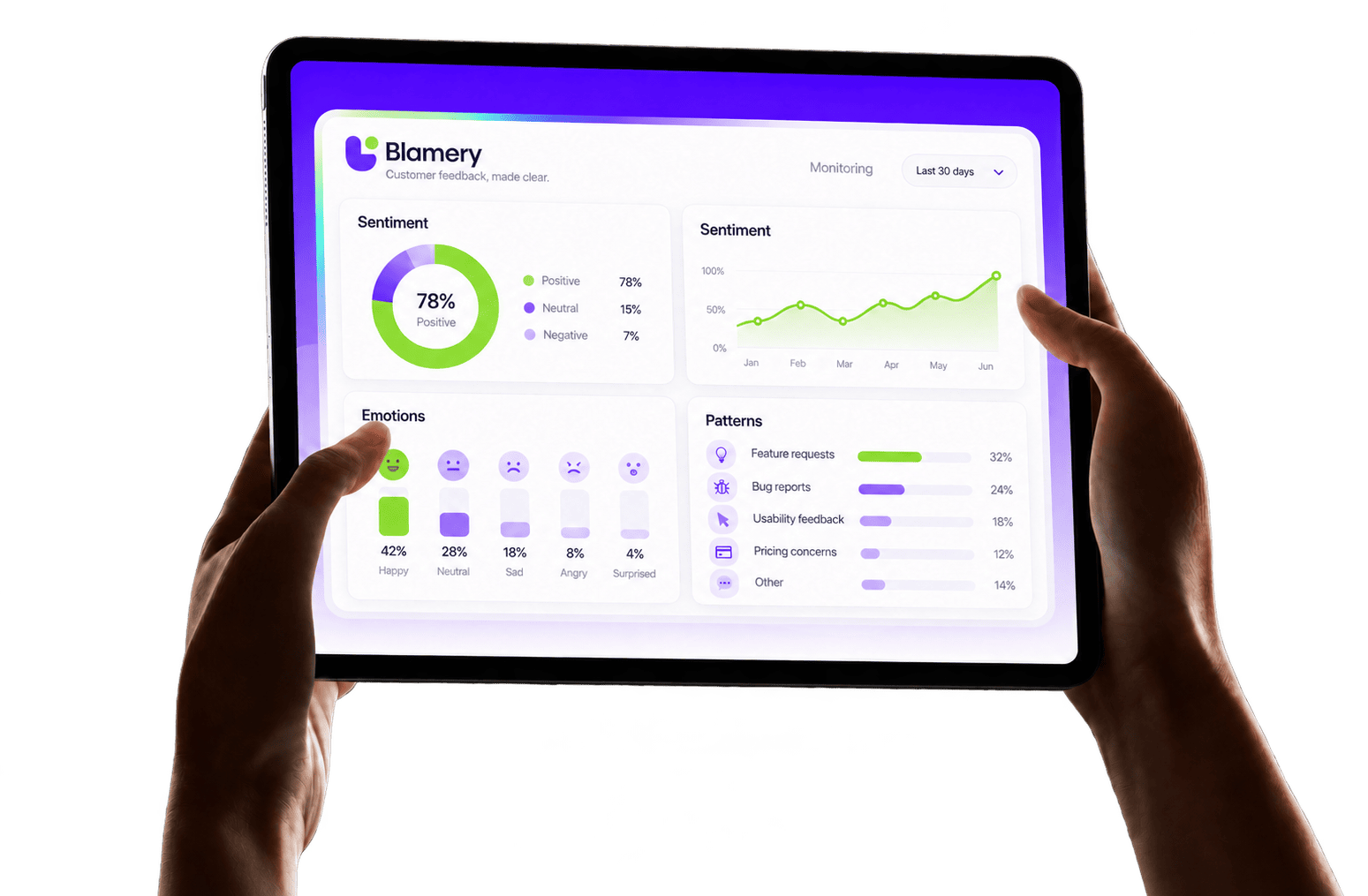

Monitor Brand Sentiment Across Reviews, AI, and the Web
Instead of focusing on single comments, Blamery identifies recurring sentiment, topics, emotions, and patterns across multiple sources.
What is brand sentiment monitoring?
Brand sentiment monitoring shows how people perceive your brand, what drives positive or negative reactions, and which issues appear repeatedly. It helps teams spot reputation risks earlier, understand customer priorities, and make decisions based on patterns rather than isolated comments. Blamery brings together reviews, user-generated content, AI responses, and web coverage to reveal the themes, emotions, strengths, and concerns shaping your brand.
How to Monitor What People are Saying About Your Brand
Easily track what people say about your brand. In one simple flow.
Set Your Scope
Define what you want to monitor.
- Enter your brand keyword
- Select country
- Choose language
Choose Monitoring Type
Pick the data sources you want to analyze.
- Media (blogs & news)
- UGC (reviews & forums)
- LLM (AI-generated insights)
Collect Data
System gathers relevant mentions automatically.
- Articles and media coverage
- User discussions and reviews
- AI-generated brand analysis
Analyze Signals
Each mention is processed into structured data.
- Sentiment (positive / neutral / negative)
- Topics and themes
- Emotions and intent
Get Clear Insights
Receive actionable outputs instantly.
- Key trends and patterns
- Risks and opportunities
- Ready-to-use reports (PDF, EXCELL, HTML)
Why Brand Sentiment Monitoring Is Important
Companies receive feedback from many places, but individual comments rarely show the full picture. Brand sentiment monitoring helps teams understand how perception is changing, which themes appear repeatedly, and where action is needed most.
- Detect reputation risks before they become larger problems
- Prioritize improvements across product, marketing, and customer support
- Make decisions based on recurring patterns, not isolated opinions
Hear from Teams Who Turn Insights into Action
Learn how teams uncover problems, act on insights, and turn feedback into measurable growth.
"This is where we start every analysis. It quickly shows us the main problem areas, and then we can dig deeper into specific reviews and cases to understand what’s really going on."
Daniel Weber
Hamburg, Germany
"The platform gives us a clear starting point. Instead of going through data blindly, we immediately see where to focus and then explore the data deeper when needed."
Michael Turner
Manchester, UK
"It’s not just about insights... It’s about direction. We use it to understand what matters most, and then we dive deeper into specific feedback to take action."
Piotr Nowak
Kraków, Poland
Benefits of brand sentiment monitoring
Our platform gives you a clear starting point to see what’s happening around your brand and where to focus next.
No noise, no guesswork, just structured insights you can use.
- Understand which experiences, topics, and recurring issues drive positive and negative sentiment around your brand.
- Spot growing frustration, emerging concerns, and positive trends before they have a wider impact on your reputation.
- Use structured insights from reviews, user-generated content, AI responses, and web coverage to guide product, marketing, and customer experience priorities.
Commonly asked questions
Quick answers to help you understand how the platform works and how to use it effectively.
Social listening mainly tracks mentions and conversations on social platforms. Brand sentiment monitoring looks more broadly across reviews, user-generated content, AI responses, blogs, news, and other public web sources.
Blamery processes individual pieces of feedback, but its main purpose is to identify recurring patterns across many sources. This helps teams understand common frustrations, strengths, and themes.
Blamery analyzes customer reviews, online discussions, AI-generated responses, blogs, news, and other relevant public sources. Coverage can vary depending on the project setup and available data.
Blamery can reveal sentiment distribution, recurring positive and negative themes, customer emotions, reputation risks, brand strengths, and patterns that appear repeatedly across sources.
Teams can use the results to improve products and services, refine marketing messages, strengthen customer support, prioritize reputation risks, and track how brand perception changes over time.